News Articles
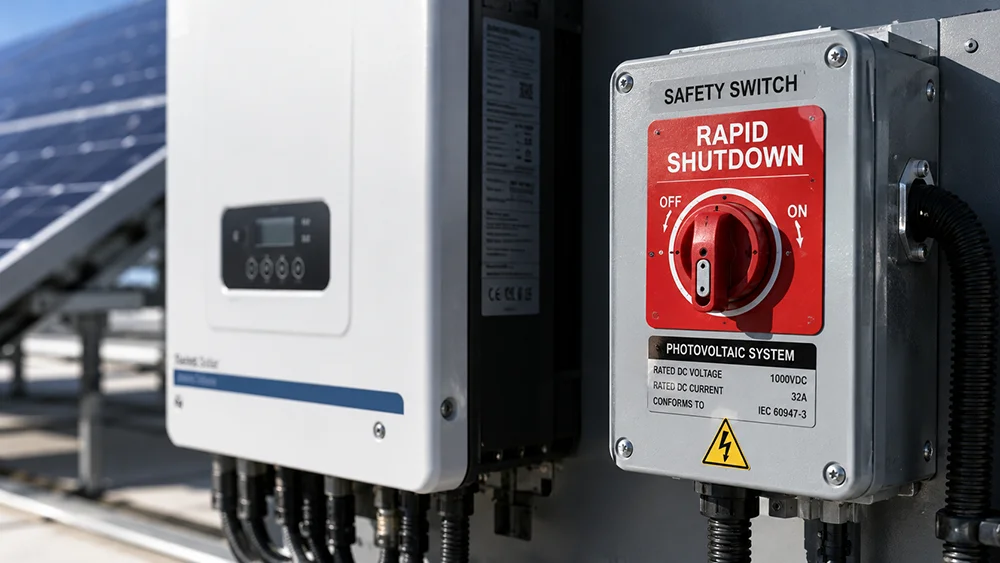
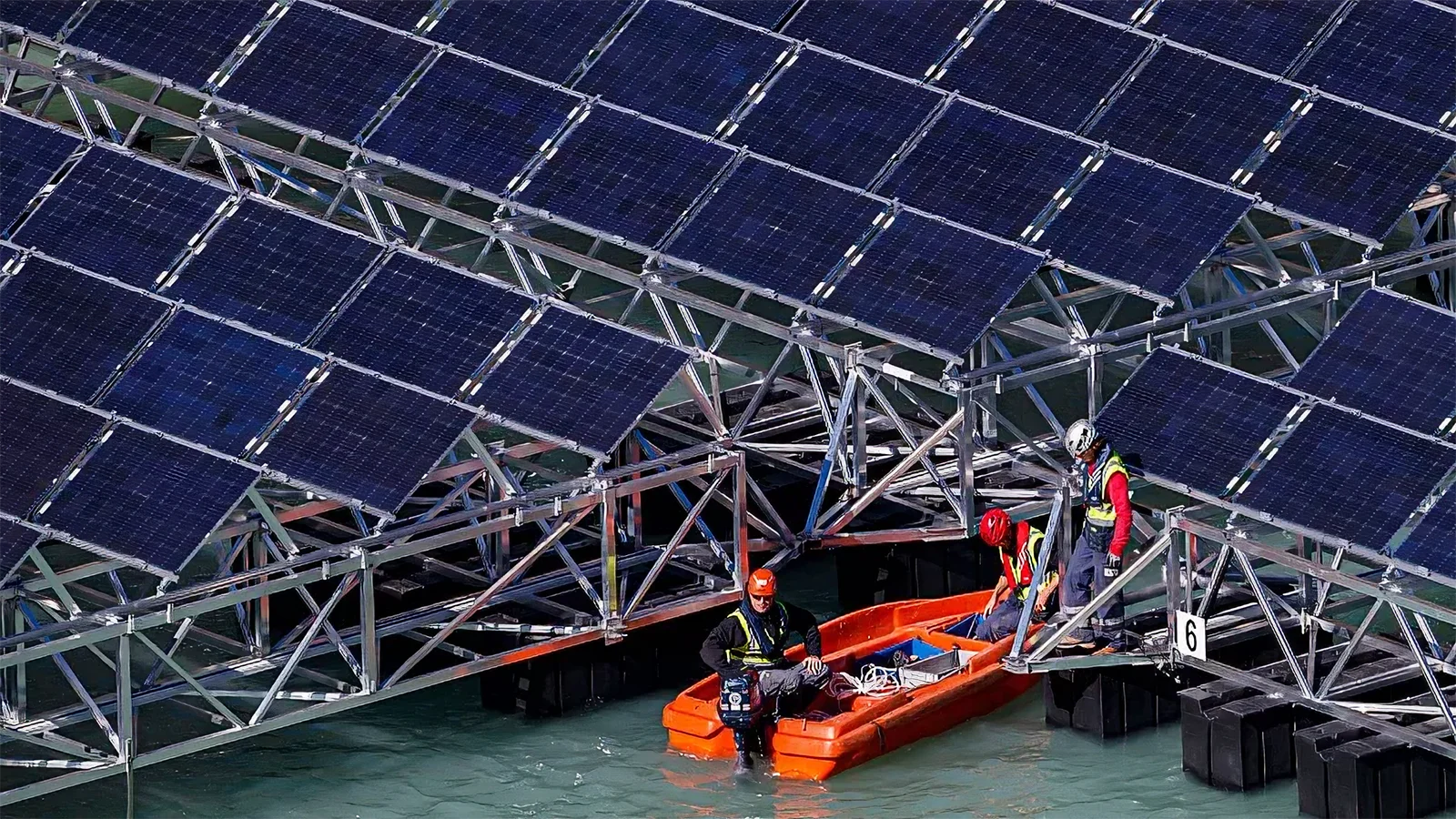
Installing rooftop solar power systems in industrial plants, commercial buildings, and various establishments can significantly reduce electricity costs. However, from an electrical engineering perspective, a factor equally important as cost-effectiveness is the safety of life and property. This is because solar panels immediately produce high-voltage direct current (DC) of several hundred to a thousand volts the moment sunlight strikes them.
Even after the main inverter switch inside the building is cut off, residual voltage remains on the solar panels and roof wiring, posing a significant danger to firefighters and maintenance teams in case of an emergency. For this reason, the Rapid Shutdown Solar Cell System was developed as a crucial international safety standard and has become a legal requirement for modern industrial plants.
What is Rapid Shutdown and how does it work?
A Rapid Shutdown System (RSD) is a module-level rapid shutdown system that quickly shuts down a solar cell system at the panel level in the event of an emergency or when the main power switch is flipped. The system reduces the DC voltage on the roof to a safe voltage level.
How the Rapid Shutdown system works:
According to electrical safety standards, when the Rapid Shutdown Switch is pressed or when the main power supply is cut off, the control devices attached to each solar panel will immediately activate to reduce the voltage on the roof to a minimum of 30 volts within 30 seconds outside the solar boundary and to a minimum of 80 volts inside the solar boundary. This voltage level is not life-threatening if directly touched by humans.
Why are Thai electrical installation standards mandatory?
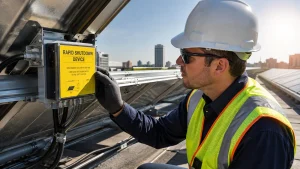
The Engineering Institute of Thailand under the Royal Patronage (EIT), in collaboration with Thailand's energy regulatory agency, has updated the electrical installation standards for Thailand (rooftop solar power generation systems). The new standards require rooftop solar systems for commercial buildings and industrial plants to include a rapid shutdown system in accordance with international standards such as NEC 2020 (National Electrical Code – Article 690.12). The key reasons for this are as follows:
1. Protecting firefighters while on duty (Firefighter Safety).
When a fire occurs in a building, firefighters need to climb onto the roof to spray water or cut through the cooling structure. Without a rapid shutdown system, the high-voltage DC current from the solar panels will continue to flow through the wires. Spraying water or cutting the wires could cause an electric shock and be life-threatening to the firefighters.
2. Protection against DC arc faults.
When direct current (DC) leaks or loose connections occur, it generates a high-temperature spark (arc flash) that is more difficult to extinguish than alternating current (AC). A Rapid Shutdown system, working in conjunction with Module-Level Power Electronics (MLPE) devices, will immediately shut down the power supply upon detecting any abnormality, preventing roof fires from spreading.
3. Complies with the insurance company's underwriting requirements (Insurance Compliance).
Currently, leading property insurance companies require factories and commercial buildings with solar rooftop installations to have a Rapid Shutdown system that meets the TISI (National Engineering Institute of Thailand) or NEC (National Economic Corridor) standards as a key condition for policy approval and premium consideration.
Comparison Table: Solar Panel Systems with vs. Without Rapid Shutdown System.
| Comparison topics | Systems equipped with Rapid Shutdown (new standard) | Traditional system (no Rapid Shutdown) |
|---|---|---|
| DC voltage on the roof when the switch is turned off. | Reduced to <30V within 30 seconds. | High voltage of 600V – 1,000V remains present whenever there is sunlight. |
| Safety of firefighters. | Highly safe; can immediately begin emergency water spraying operations. | High risk of electric shock due to high voltage. |
| Compliance with TISI/NEC standards. | 100% compliant with all international laws and regulations. | It does not meet modern building safety standards. |
| Approval of building insurance application (Insurance). | It's easy to meet the insurance coverage requirements. | Your insurance application may be rejected, or you may be charged higher premiums. |
| Safety in Operation and Maintenance (O&M). | The technicians performed maintenance work on the roof safely. | There are risks involved while cleaning or checking the system. |
Types of rapid shutdown devices commonly used in the industrial sector.
The installation of rapid shutdown systems in factories can be done in various engineering ways, depending on the architecture of the inverter and solar panels selected:
- Using Microinverters (panel-level inverters): Converts DC power to AC at the individual solar panel, eliminating high-voltage DC cables on the roof. Features a built-in rapid shutdown system.
- Using a Power Optimizer device (such as Solaredge / Huawei Smart Module Controller): Installed next to the solar panel. To manage energy at the panel level and cut the voltage down to 1V per panel immediately when the system is turned off.
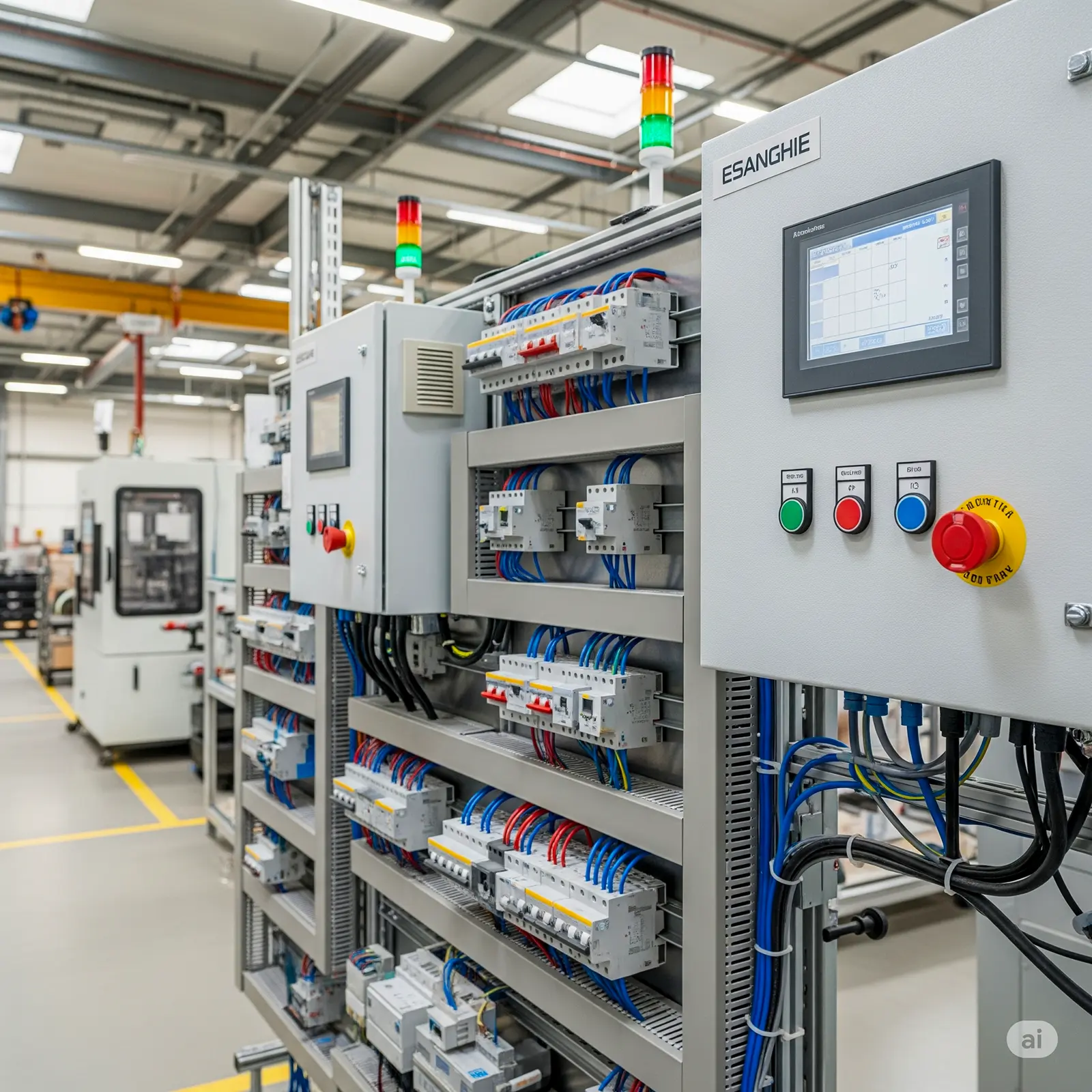
- Using Local Rapid Shutdown Transmitters/Receivers (Transmitter + RSD Units): Panel-level circuit breakers that are integrated into typical string inverter systems to cut off power when no control signal is received from the main distribution panel.
In summary: Safe, reliable, and installed with TISI (Thai Industrial Standards Institute) certified solar panels by Energy X.
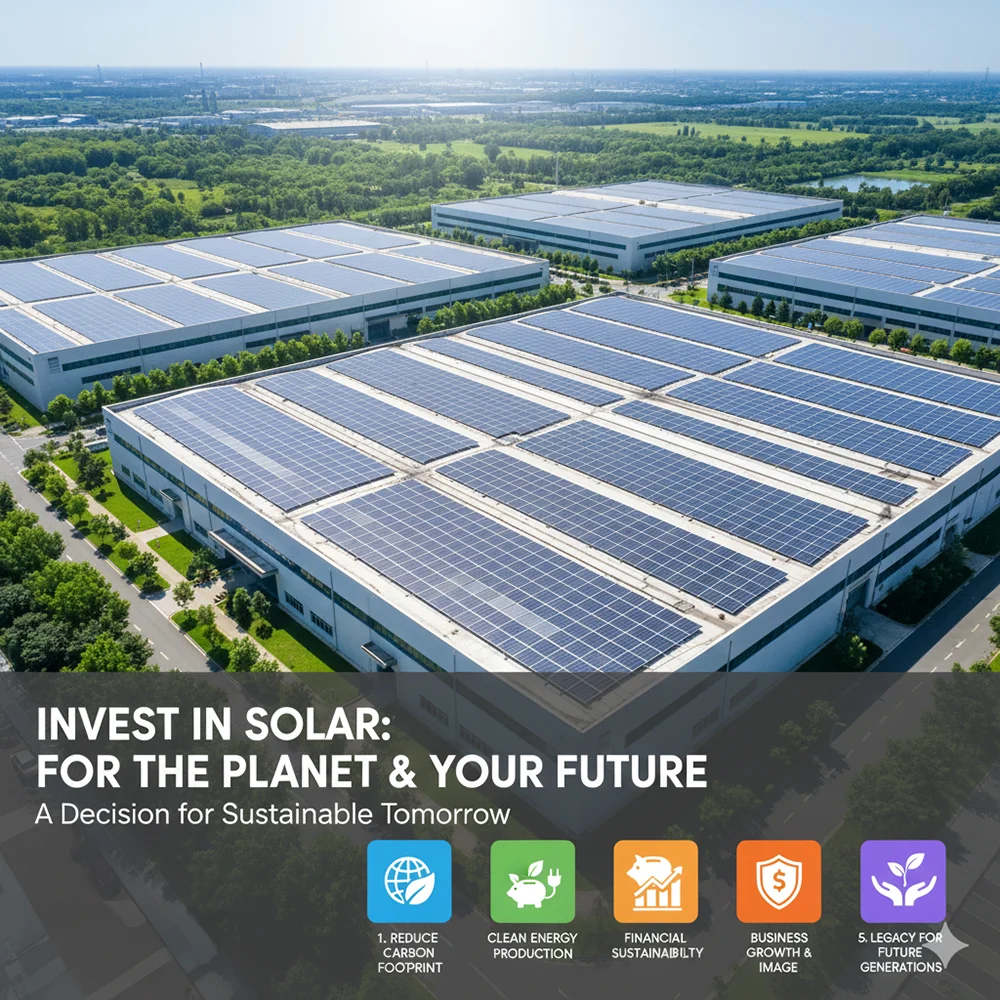
Investing in a solar rooftop system for industrial plants isn't just about finding the equipment that generates the most electricity, but also about ensuring the highest safety standards to protect the building structure and the lives of all employees.
Energy X is committed to international electrical engineering standards. Every project we design and install is overseen by professional engineers, and includes the installation of Rapid Shutdown systems in strict accordance with the requirements of the Engineering Institute of Thailand (EIT) and the Electricity Generating Authority of Thailand (EGAT). This ensures your business receives cost-effective, safe, and risk-free electricity savings for 25 years.
Enhance the safety of your factory's solar power system to the highest level! Contact our team of expert engineers at Energy X today for free consultation and system design according to TISI (Thai Industrial Standards Institute) standards.