News Articles
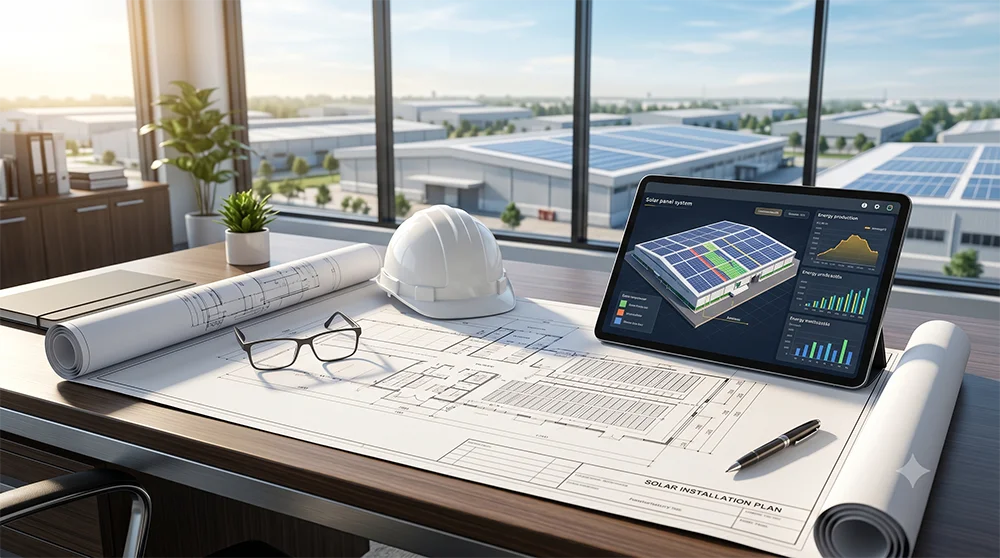
Investing in solar rooftop systems for businesses and industrial plants is a highly cost-effective strategy for long-term cost reduction. However, the major concern for most business owners isn't the technology or cost-effectiveness, but rather the complex "solar panel installation permit application process for factories," involving multiple government agencies and constantly updated legal regulations as of 2026.
If a factory installs and activates a system (parallel power supply) without obtaining the necessary permits, it may face fines, retroactive power supply termination, or difficulties renewing its factory operating license. This article summarizes every step, document, and relevant agency in detail, allowing you to prepare professionally and ensure a smooth renewal process.
3 main agencies you must apply for permits from before installing solar panels.
In Thailand, the installation of solar panels on the rooftops of commercial buildings or industrial plants is governed by laws covering aspects of building structure, energy business operations, and electrical system safety. Businesses must contact and submit documents to three main agencies, in that order:
1. Local administrative organizations (LAOs) or district offices.
This agency oversees the safety of building structures according to the Building Control Act. Factory owners must apply for a building permit or building modification permit (Form A.1) or submit documents notifying their intention to modify the building for the installation of solar panels (under the exemption criteria that do not require Form A.1, but still require notification and certification of the weight by a civil engineer).
2. The Energy Regulatory Commission (ERC)
The Energy Regulatory Commission (ERC) regulates energy businesses. Installers of solar cell systems must apply for an exemption from requiring an energy business license (for systems with an installed capacity of no more than 1,000 kilowatts or 1 megawatt) or apply for an electricity generation license for systems larger than that, through the ERC's information system.
3. Provincial Electricity Authority (PEA) or Metropolitan Electricity Authority (MEA)
It is the last agency that will come in to inspect electrical engineering standards and system safety in order to approve request for parallel connection to the electrical grid system (Grid Connection) so that the factory can distribute electricity produced from solar cells together with main electricity from transmission lines safely without causing a back-fire.
Diagram: Step-by-step process for submitting a solar cell permit application.
[Step 1: Local Authority]
└── Submit building modification notification / Request Form A.1 (Structural inspection by a civil engineer)
│
[Step 2: Energy Regulatory Commission Office]
└── Apply for exemption/energy business license (online system)
│
[Step 3: Electricity Authority (MEA / PEA)]
└── Submit connection request -> On-site standard inspection -> Sign connection contract and activate the system
Important documents that factory owners must have ready.
To expedite the government review process, business owners should prepare all necessary basic and engineering documents in advance. The essential documents required include:
1. Documents proving ownership of land and buildings.
Copies of land title deeds, building lease agreements (if applicable), and factory operating licenses (Form R.N.4) or building occupancy permits (Form A.1/A.6).
2. Legal entity documents.
Company registration certificate (not older than 3-6 months), copies of the national ID card and house registration of the authorized signatory director.
3. Engineering plans and calculations.
Roof structure plan and solar panel layout.
- A structural strength and load-bearing calculation report (Structural Analysis) must be certified by a licensed civil engineer (at least at the associate level). (This step is very important for safety.)
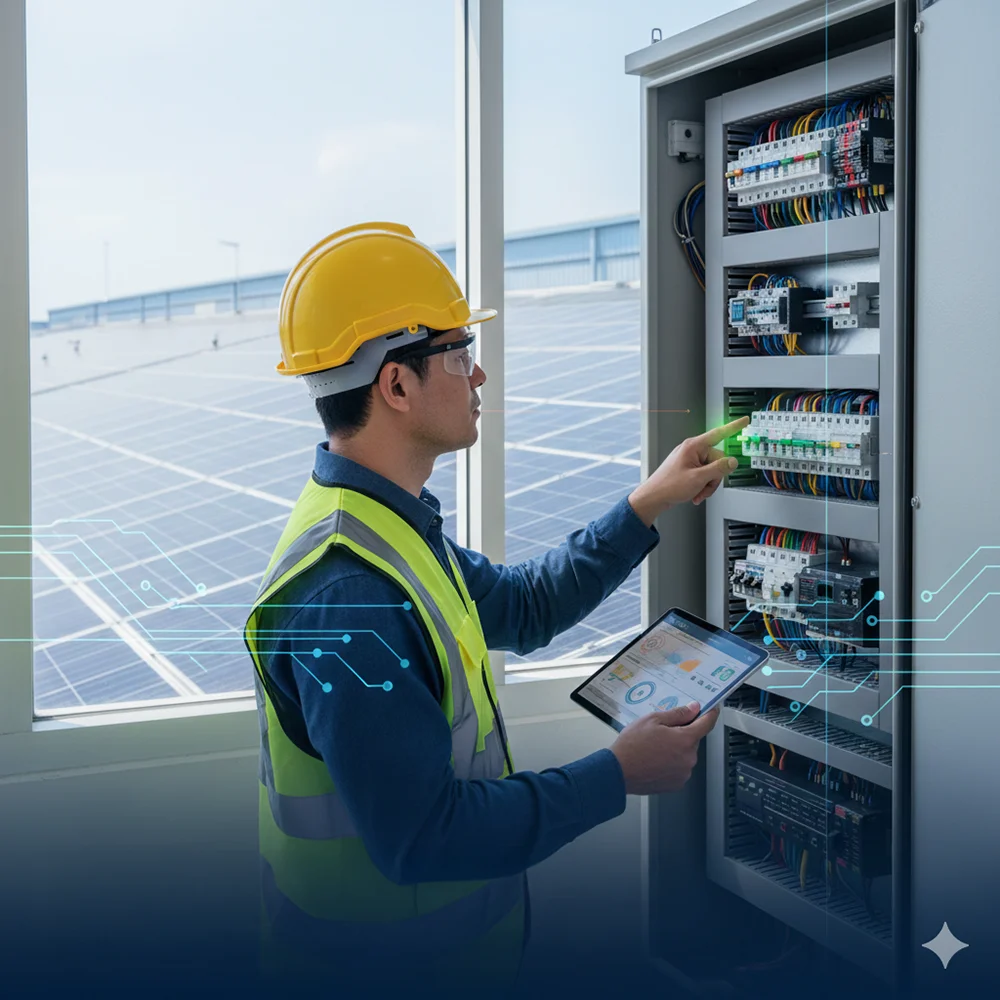
- A single-line electrical system diagram, certified by a licensed electrical engineer or professional electrical engineer.
4. Equipment Details (Datasheet & Certificates)
Certifications for solar panels and inverters (e.g., compliance with IEC standards and listing on the power authority's compliance list).
The process of applying for a grid connection with the electricity authority.
After completing the processes with the local civil engineering department and the Energy Regulatory Commission (ERC), the final and most crucial step in the engineering dimension is submitting the application to the electricity authority (MEA for Bangkok and surrounding areas / PEA for other provinces). The process is as follows:
Submitting an application through the online system.
The contractor or installation company (EPC) must upload the Single Line Diagram, permit documents from the first two agencies, and a list of all equipment into the electricity authority's portal system.
Pre-Commissioning Inspection (Standard and Safety Inspection)
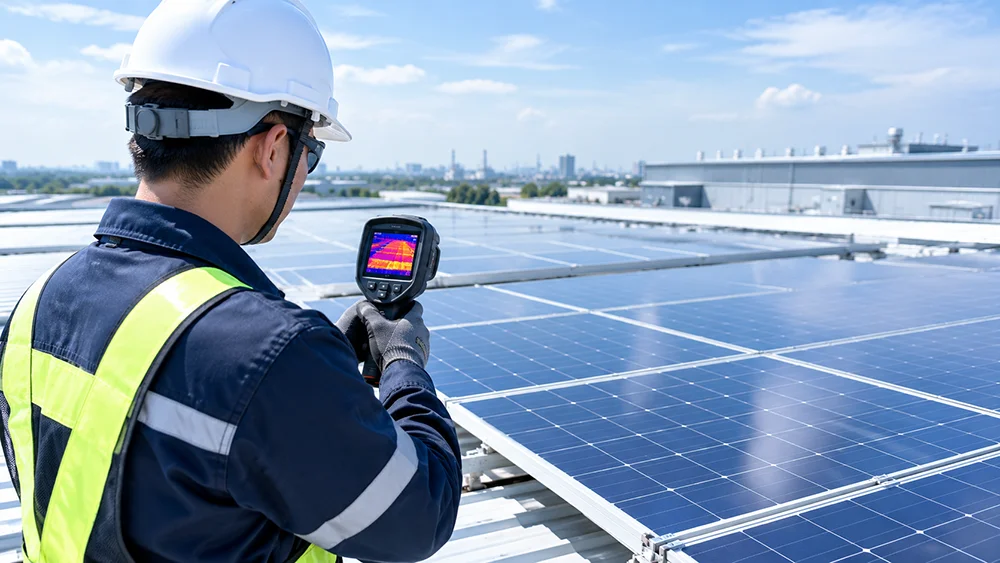
Electricity authority officials will schedule an on-site inspection to test safety systems, such as testing the Zero Export Management system, checking wiring and conduit installation, and verifying that the Rapid Shutdown system is functioning correctly and according to specified standards.
Replacing the meter and officially activating the system.
Once the inspection results meet the criteria, the electricity authority will proceed to replace the factory's electricity meters with bi-directional digital smart meters. Following this, a system connection contract will be signed, authorizing the factory to switch on the solar rooftop system to generate electricity in conjunction with the grid, ensuring 100% compliance.
In summary: Why choosing a one-stop service provider is the best option?
As you can see, all the procedures and regulations mentioned above require time, legal understanding, and specialized expertise from engineers in two fields (civil and electrical). Incorrect documentation or the selection of equipment that doesn't meet the electricity authority's standards could delay the project by several months and result in lost opportunities for electricity savings.
To minimize these complexities, most businesses prefer to use the services of professional solar panel installation contractors offering a One-Stop Service, such as Energy X, which handles everything from site analysis and engineering design to sourcing Tier 1 equipment and providing a legal team to manage documentation and coordinate with all government agencies from start to finish. This ensures that your factory can quickly, safely, and legally activate its clean energy system.
Reduce your paperwork burden; let professionals handle it for you.
Eliminate the worry of complicated permitting processes. Install a solar rooftop system with international engineering standards from Energy X today. We are happy to provide consultation and support your business every step of the way. Contact us now!