News Articles
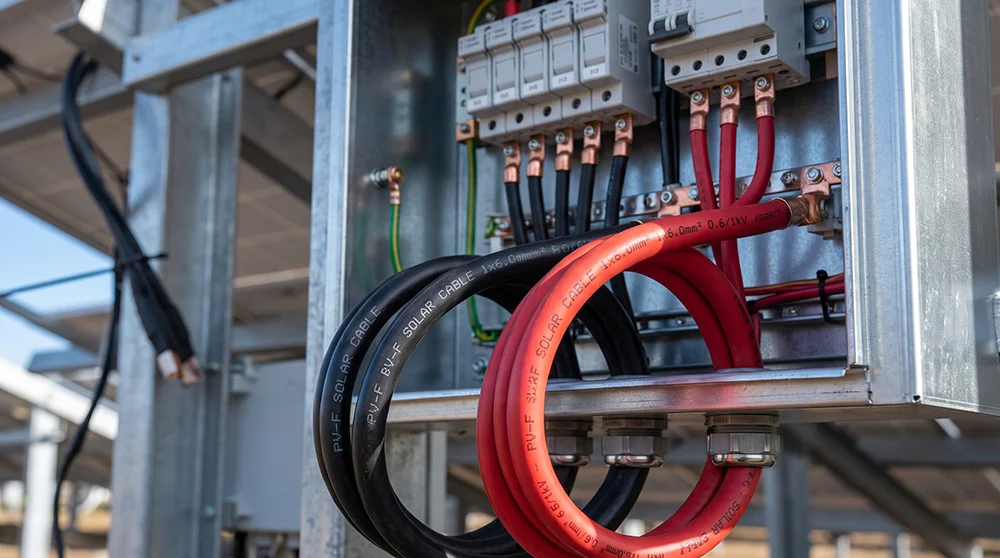
When it comes to installing solar rooftop systems for industrial factories or commercial buildings, most business owners tend to prioritize choosing the brands of "solar panels" and "inverters," as they are the primary equipment responsible for generating and converting electricity. However, in reality, "cables and protection equipment" are the critical heart that determines whether your solar energy system will operate safely, without fire risks, and last for a lifespan of up to 25 years.
Solar energy systems generate high-voltage direct current (DC High Voltage) whenever there is sunlight. Choosing engineering equipment that does not meet standards can lead to electrical leakage, short circuits, or even severe arc flashes on the roof. This article takes an in-depth look at standard solar cables and the importance of protection equipment in control panels to help you stay informed and choose installation contractors with maximum safety.
Why do solar cables specifically require PV-F wires, and can standard household wires be used instead?
One of the most dangerous mistakes in non-standard solar installation is using general alternating current (AC) cables (such as THW or VAF wires) for rooftop solar wiring, which is a severe engineering violation. For solar systems, only PV Solar cables or standard PV1-F / H1Z2Z2-K wires must be used for the following reasons:
1. UV & Weather Resistance
PV solar cables are designed to withstand harsh sunlight, ultraviolet (UV) radiation, ozone, and rooftop moisture for a lifespan of up to 25 years. In contrast, standard household electrical wires exposed to sunlight on a rooftop will begin to become brittle and crack within just 1–2 years, eventually leading to electrical leakage onto the roof structure.
2. Double Insulation for Electric Leakage Protection
Standard solar cables feature double insulation (Cross-linked Polyolefin). The inner layer prevents electrical leakage, while the outer layer provides mechanical protection against scratches and abrasion. This ensures that even if the cable passes over metal frames or steel angles, there will be no risk of electrical shock or leakage.
3. High Temperature Resistance
Accumulated temperatures beneath solar panels during the day can soar up to 70–90 degrees Celsius. PV-F cables are engineered to withstand operating temperatures of up to 90°C and conductor temperatures of up to 120°C (for a period of time) heat levels that standard household wires simply cannot endure.
Key Components in a Solar Combiner Box and Protection Devices
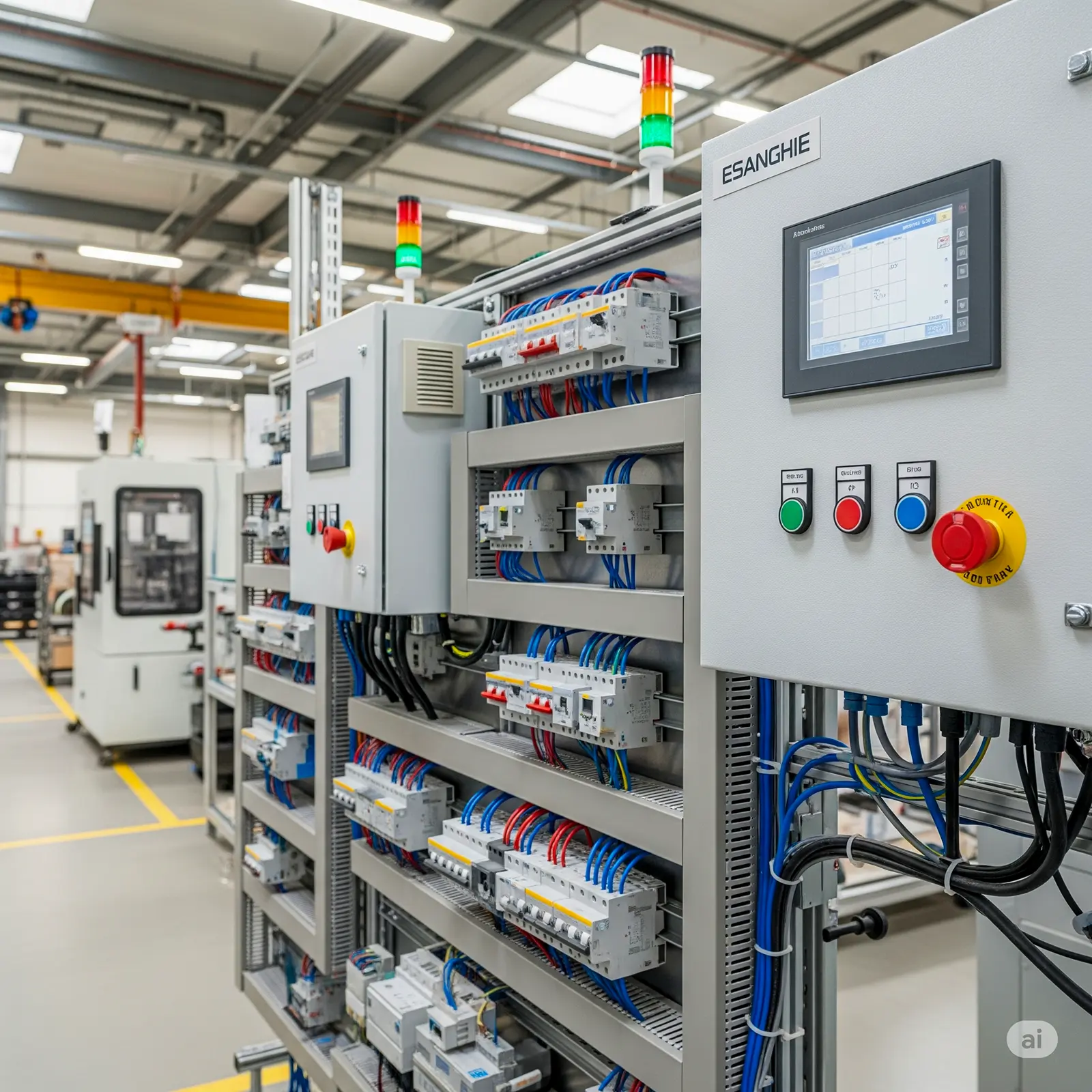
Besides the cables, the Solar Combiner Box or Direct Current (DC) combiner box serves as the first line of defense to protect your inverter and property from electrical system anomalies. Within an engineering-standard control panel, it should consist of the following protective devices:
1. DC Fuse
Acts as a protection against reverse current flowing back into the solar panels, which can occur if certain strings have issues or are shaded. Without a protective DC fuse, current from other panels could flow backward, damaging the faulty panels, causing accumulated heat, and potentially leading to a fire.
2. DC Breaker / Isolator Switch
Acts as a disconnection switch for the DC electrical circuit from the inverter, ensuring safety while engineers or technicians perform maintenance operations (O&M). A quality DC breaker must be capable of quickly extinguishing direct current (DC) arcs.
3. DC Surge Protection Device (SPD)
Factory roofs equipped with solar panels are at risk of being struck by lightning, both through direct strikes and induced surges. DC Surge Protection Device (DC SPD Type 1 or Type 2) functions to instantly divert the surge current caused by lightning strikes directly down to the ground before that high current can enter and damage your main inverter, which is worth hundreds of thousands to millions of baht.
Comparison Table: Standard vs. Non-Standard Solar Cable and Control Panel Equipment
| Comparison topics | PV-F Standard Equipment and Engineering-Grade Combiner Box | General Equipment / Non-Standard Work |
|---|---|---|
| Cable Insulation Lifespan | 20 – 25 years durability (UV / high temperature resistant) | Insulation cracks and leads to electrical leakage within 1–3 years |
| Lightning Protection Safety | Inverter damaged, requiring expensive replacement | The inverter is damaged and must be replaced at one's own expense. |
| Operations and Maintenance (O&M) | Safe circuit disconnection via dedicated DC circuit breakers | Risk of Arc Flash Hazards to Maintenance Technicians |
| Certification from relevant authorities (EIT/PEA/MEA) | Passes the PEA/MEA inspection, ready for immediate grid synchronization. | Risk of failing inspection, conduit and wiring systems must be reinstalled. |
Conduit Systems and Wiring Standards
Standard solar cables will operate with maximum efficiency only when installed together with a Conduit System that complies with the electrical installation standards of the Engineering Institute of Thailand (EIT).
- DC cables installed on roofs and outdoors should be routed in electrical metallic tubing (EMT) or thick metal conduit (IMC/RSC) that is weather and corrosion-resistant.
- Wiring routed through areas prone to friction must use plastic-coated flexible waterproof conduits, and connection points must use waterproof boxes with an IP65 rating or higher to protect against rainwater and moisture damaging the wire connections.
Conclusion: Confident in Engineering-Grade Materials and International Safety Standards – Install Solar Panels with Energy X
Investing in a solar energy system is a long-term investment aimed at a 25-year lifespan. Cost-cutting by using non-standard cables or control panel equipment may save a few thousand or tens of thousands of baht initially, but it will bring subsequent risks of fire hazards and massive business damage.
Energy X as a comprehensive EPC solar installation service provider, we adhere to the highest engineering and safety standards. We exclusively use PV-F standard solar cables from leading brands and assemble solar combiner boxes with international brand protection devices, calculated and supervised at every step by professional electrical engineers. This ensures your factory can generate electricity reliably, cost-effectively, and with maximum safety throughout its lifespan.
Want a safe solar system with no worries about electrical leakage or short circuits? Contact the Energy X engineering team for a free consultation and electrical system design at the highest standards!