News Articles
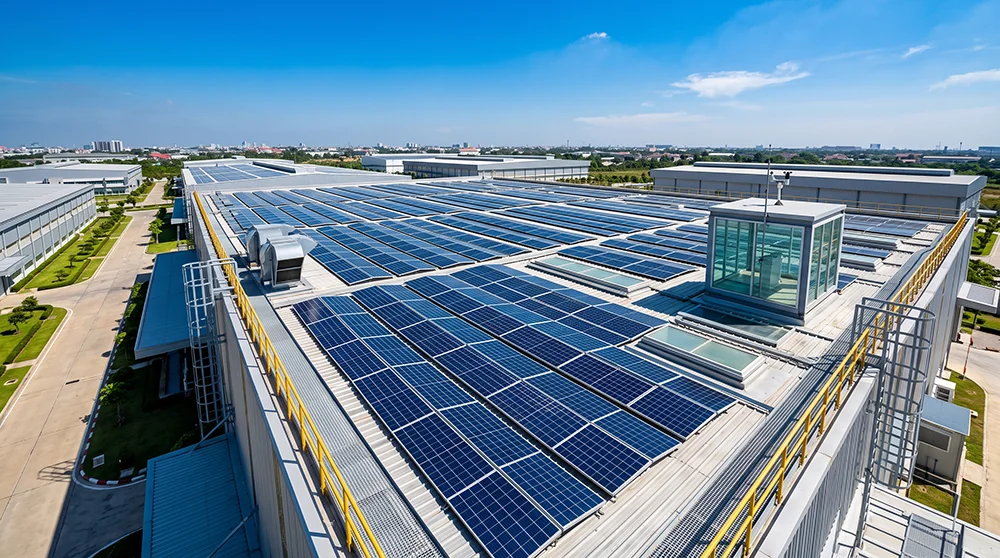
The textile, apparel, and weaving industries have long served as vital components driving Thailand’s economy and export sector. However, in recent years, operators in this sector have faced multifaceted challenges ranging from foreign price competition and international environmental trade regulations to the most critical issue of all: continuously rising electricity costs.
Textile manufacturing processes ranging from spinning, weaving, and dyeing & finishing to sewing rely heavily on heavy machinery and climate control systems that operate continuously. Consequently, exploring alternative energy solutions has become a priority. Deciding to install solar power systems in textile factories serves as a powerful tool to immediately reduce production costs, enhance competitiveness, and elevate the facility to meet international green industry standards.
Why does the textile and apparel industry need to use clean energy?
The energy consumption profile of weaving and textile factories possesses unique characteristics that make the installation of rooftop solar systems particularly cost-effective often more so than in other industries for several reasons:
1. The weaving machine motor operates continuously during the day.
Textile production lines utilize numerous large electric motors such as those in spinning machines and air-jet or water-jet looms that draw power continuously during the day. This demand coincides with the period of peak solar power generation, allowing solar energy to directly power these machines (at 100% utilization) and thereby reduce real-time electricity consumption from the grid.
2. Electricity cost burden from the HVAC (Heating, Ventilation, and Air Conditioning) system.
Weaving factories must strictly control indoor temperature and relative humidity to prevent yarn breakage during the weaving process. Consequently, air conditioning systems and positive-pressure ventilation fans operate intensively throughout the day, particularly during periods of intense heat. Utilizing solar energy to power the chiller systems and ventilation fans offers a targeted solution for reducing peak electricity costs.
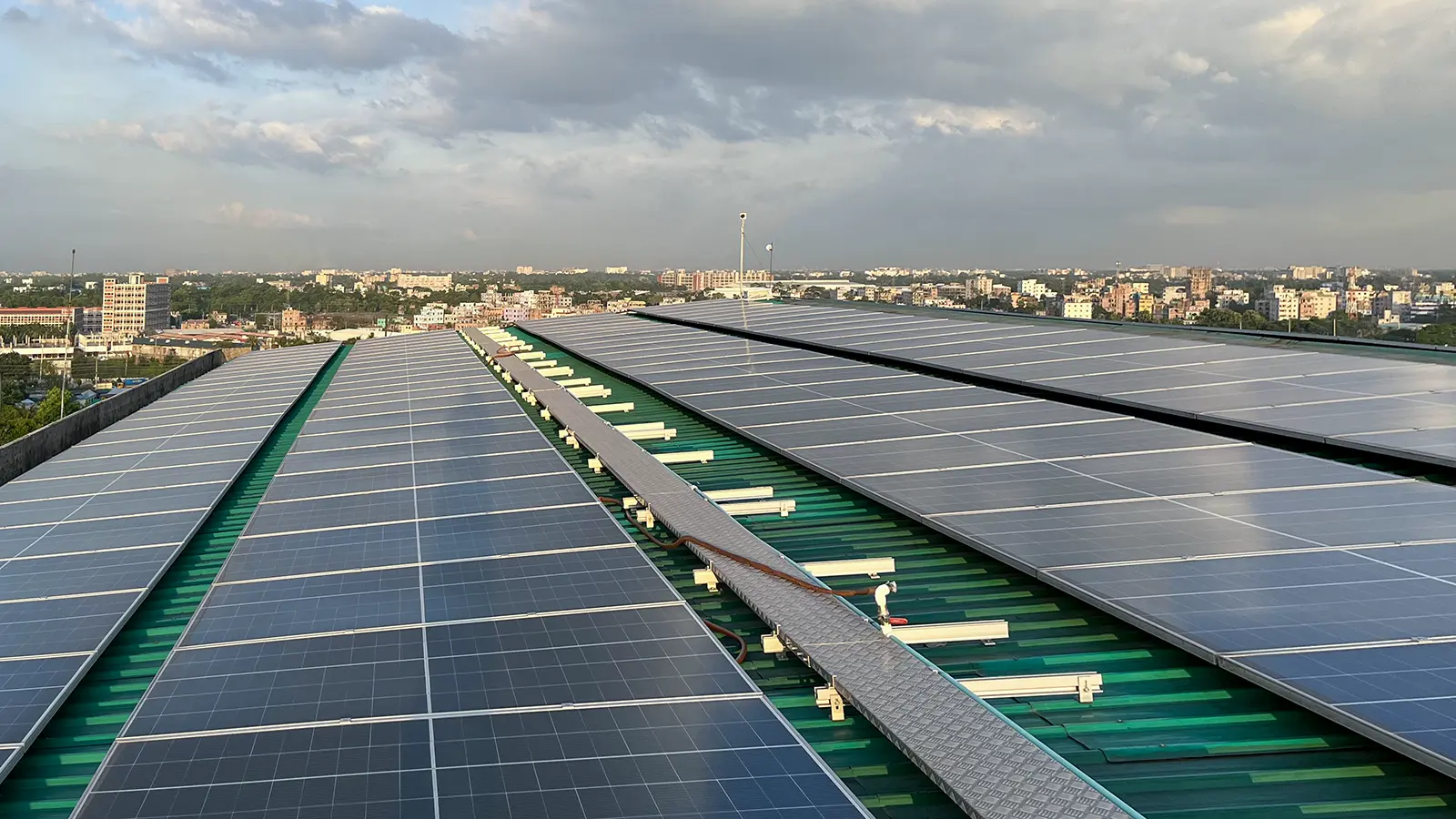
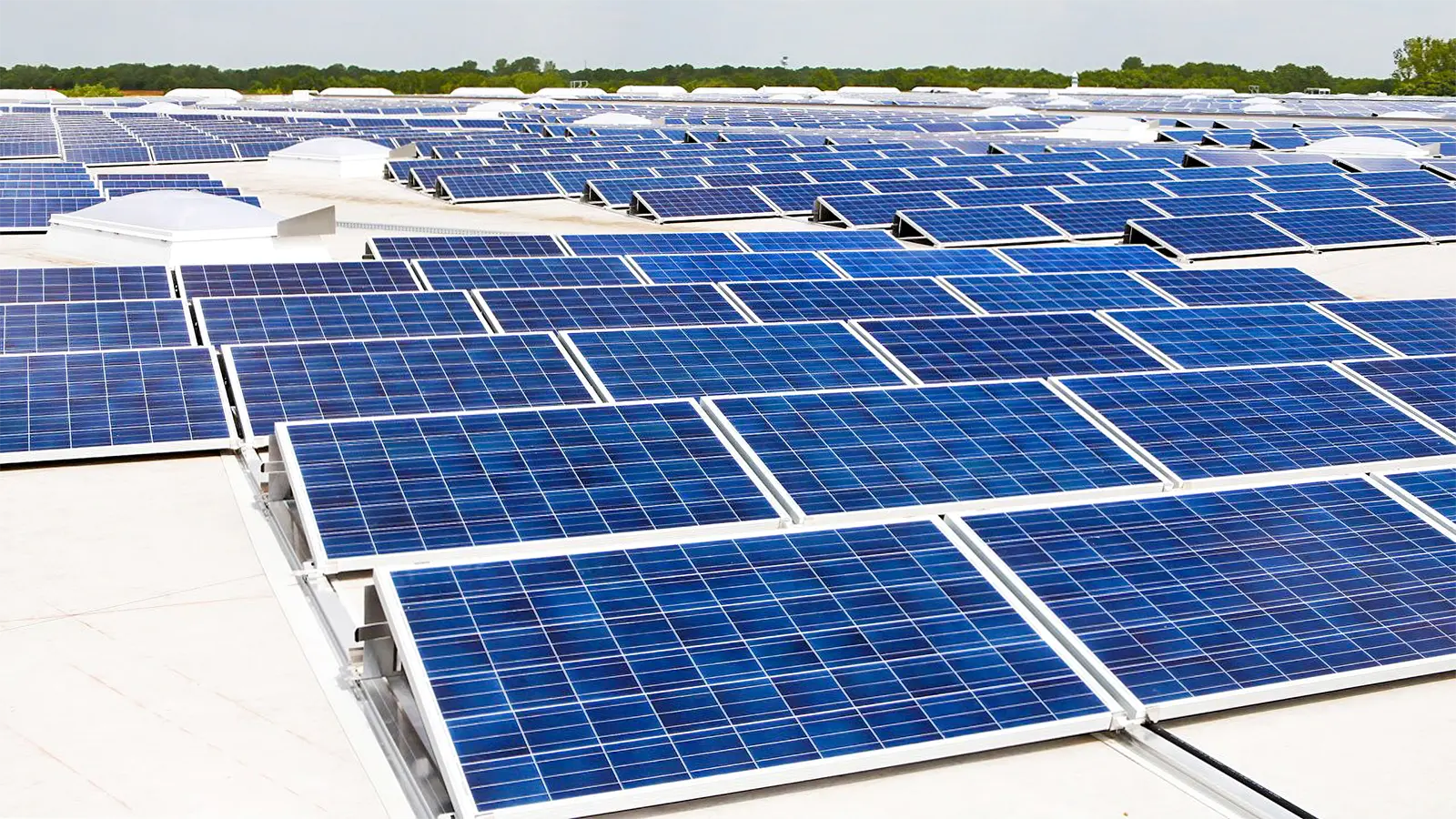
3. The factory has an expansive roof area, making it suitable for solar rooftop installations.
Textile factories are typically designed as single-story structures featuring vast, open roof areas to accommodate long production lines. This layout offers ample space for large-scale solar panel installations ranging from hundreds of kilowatts to several megawatts thereby lowering the average installation cost per watt and accelerating the return on investment.
Comparison Table: Electricity Usage Structure and Results After Installing Solar Cells in a Textile Factory
| Processes in a textile factory | Original energy usage pattern | Results after installing the solar rooftop system |
|---|---|---|
| Yarn spinning and fabric weaving line | The machinery motor runs continuously during the day shift, resulting in high base electricity costs. | Reduce electricity purchases from the utility grid by 30%–50% during daytime hours. |
| Ventilation and Air Conditioning Systems | Load surges in line with the outdoor temperature, resulting in peak demand. | Solar panels help shave peak demand and reduce attic temperatures by 3–5°C. |
| Exports and Multinational Partners | Facing pressure regarding carbon footprint and ESG criteria. | Gain a competitive edge in exports by achieving Green Supply Chain certification. |
| Unit cost of the product (Cost/Unit) | Fluctuating according to electricity rates and Ft charges. | Fixed costs allow for more accurate profit projections per piece of fabric or garment. |
International Environmental Measures and Their Impact on Thai Textile Exporters
Major trading partners, such as the European Union (EU) and the United States, have begun enforcing strict supply chain scrutiny, particularly regarding greenhouse gas emission reduction guidelines and the Carbon Border Adjustment Mechanism (CBAM). Global fashion brands are setting targets to reduce carbon emissions throughout their production processes.
Textile and garment factories in Thailand that switch to solar energy for production will gain an immediate strategic advantage:
- Secured manufacturing rights for leading brands: International clothing and fashion brands prioritize selecting suppliers that utilize renewable energy.
- Obtaining Renewable Energy Certificates (I-REC): The clean electricity generated can be converted into Renewable Energy Certificates (I-REC) to verify the energy source for export purposes.
- BOI Tax Incentives: Textile businesses investing in energy-saving technology can claim a corporate income tax exemption from the BOI of up to 50% of the investment cost for solar power systems, thereby shortening the payback period to just 3–4 years.
Engineering Precautions: Ensuring Safety in Solar Panel Installation at Textile Factories
Given the textile industry's sensitivity to dust and fabric fibers, the design and installation of solar power systems must adhere to high safety standards:
1. Protection against hazards from dust and fabric fibers (Lint & Dust Management)
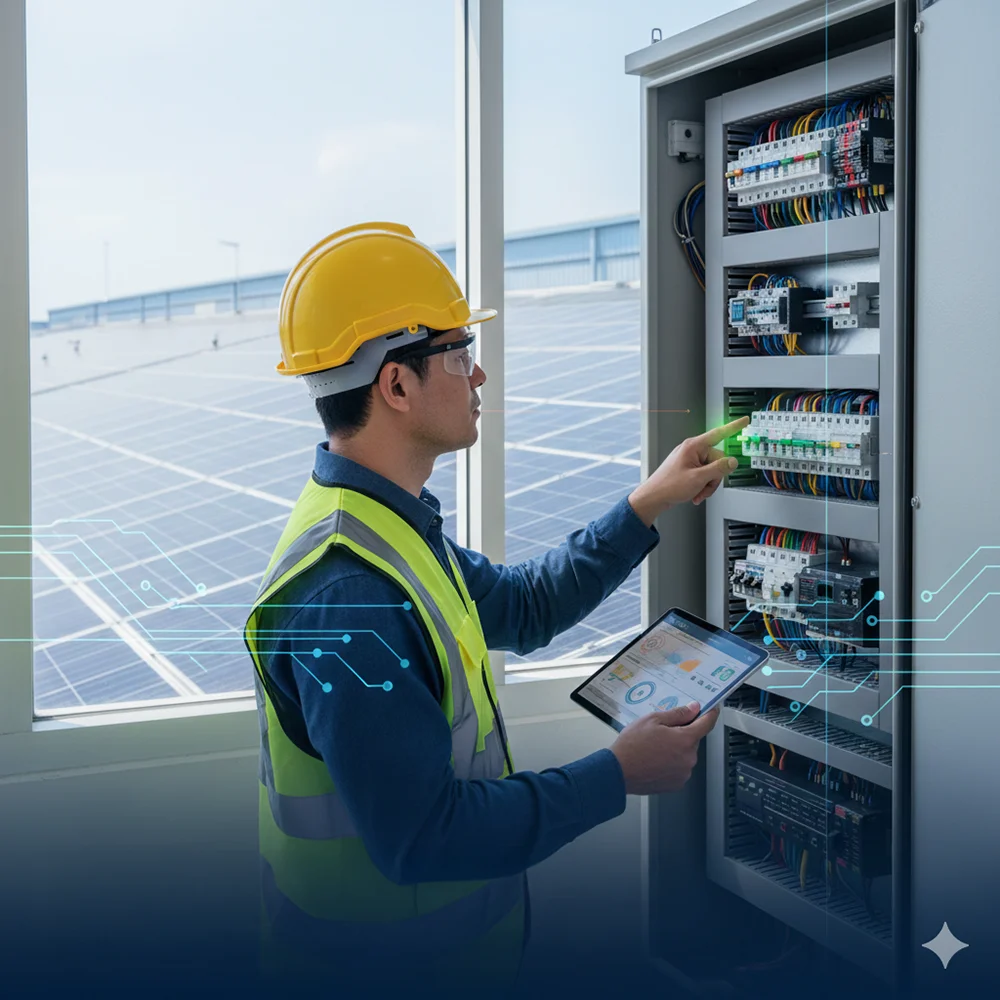
The area surrounding a textile factory may contain airborne dust and lint. Consequently, electrical control cabinets and inverters must be installed in a fully enclosed room or utilize equipment with an IP65 (or higher) ingress protection rating; an air filtration system should also be installed to prevent short circuits.
2. Rapid Shutdown Safety System
Fabrics and yarns are highly flammable materials; therefore, rooftop installations must comply with EIT standards. This requires a Rapid Shutdown system to immediately cut DC voltage to a safe level during an emergency, as well as the use of galvanized steel conduits for wiring in accordance with the highest electrical engineering standards.
Summary: Transforming a textile factory roof into a cost-saving energy source with Energy X.
Installing solar panels at a textile factory does more than just reduce monthly electricity bills; it creates a safeguard for your business against volatile energy prices and serves as a crucial stepping stone toward firmly establishing your factory as a leader in the global supply chain.
Energy X we possess expertise in comprehensive solar energy engineering (EPC) services, ranging from inspecting existing factory roof structures and designing generation capacities precisely tailored to machinery usage patterns to handling all licensing procedures, as well as providing installation warranties and proactive maintenance.
Ready to turn your textile factory roof into net profit? Contact the team of expert engineers from Energy X to evaluate the work site Analyze electricity usage and free value planning There is no cost.